
Why financial institutions need behavioral biometrics to detect more fraudulent transactions
To turn behavioral biometrics from a “nice-to-have” into a vital part of the fraud stack, fraud teams need confidence in the value it adds and clarity about when to act on the intelligence it provides. Outseer data shows that for payment fraud, customers can achieve a 10–12 percentage point uplift in fraud detection rates when behavioral biometrics is combined with the core risk engine score. This creates a powerful signal boost, but the real value comes from understanding where behavioral intelligence materially improves fraud decisioning.
One of the most important challenges behavioral biometrics helps solve is detecting fraud and scams during authenticated digital sessions. At this stage, customers are already interacting with online banking or payment services, while traditional controls have limited additional visibility into who is actually behind the screen.
At that point in the journey, fraud teams are no longer evaluating only credentials or trusted devices. They are trying to determine whether the behavior within the session is consistent with the genuine customer, a fraudster controlling the session, or a customer being manipulated during a scam.
Behavioral biometrics adds the most value when transaction scoring is uncertain
At the high-risk end, the transaction, device, beneficiary, velocity, or threat intelligence signals are usually enough to determine that a transaction is fraudulent. Behavioral biometrics may reinforce the decision but is typically not the decisive factor.
At the low-risk end, most activity is genuine. A weak behavioral profile cannot be treated as fraud on its own if other indicators are pointing to a genuine transaction. Therefore, a standalone low-confidence behavioral score can add noise faster than it adds decision value.
The greatest value of behavioral biometrics sits in the middle: sessions with inconclusive risk assessments. The device is unusual but not damning. The payment is atypical but plausible. Traditional signals alone cannot confidently determine whether the activity is genuine or fraudulent.
This is where fraud operations spend time and money because every option has a cost: allow and absorb losses, challenge and add friction, block and trigger complaints, or review and add analyst load.
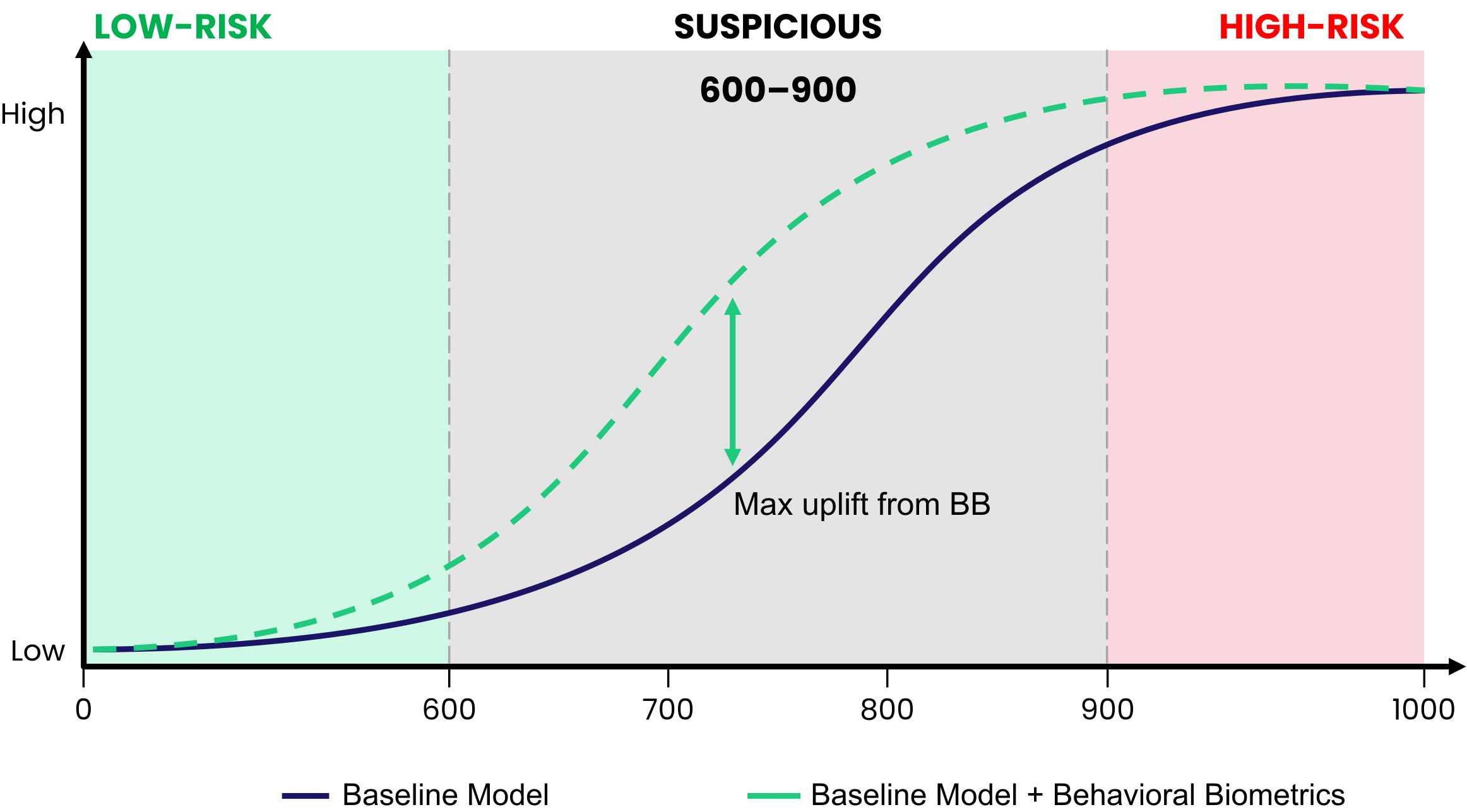
Behavioral biometrics contributes vital session-level evidence that traditional models do not capture. That evidence can move a borderline decision in either direction. High-risk behavior can increase confidence that an ambiguous event is fraudulent. A strong match to the genuine user can reduce unnecessary friction.
Behavioral biometrics adds an additional layer of insight for fraud detection
Unauthorized fraud
Behavioral biometrics helps close the visibility gap inside authenticated sessions. Valid credentials and a recognized device no longer prove that the person in control is the customer. Remote access activity, scripted input, copy-paste patterns, abnormal timing, and unnatural navigation can expose anomalies that other signals miss.
Authorized fraud
For scam prevention and authorized fraud, the value is different. Behavioral biometrics does not detect intent. The customer may intend to complete the payment because they believe the story. The question is whether their behavior has drifted in ways consistent with pressure, hesitation, urgency, guidance, or remote assistance.
Improving fraud detection rates without increasing customer friction
For a large APAC bank that uses Outseer Fraud Manager platform, behavioral biometrics delivered a 12.9 percentage point uplift in the fraud detection rate. That translated into projected annual fraud-loss savings of over $2 million, while maintaining intervention rates under 1%.
This directly improves all the metrics that matter: detection uplift, loss reduction, false-positive control, and operational efficiency.
Reduced false positives for better UX and analyst capacity
Strong behavioral matches can slash false positives by recognizing more legitimate customers and preventing unnecessary step-ups. That improves customer experience, but it also protects fraud operations.
Fewer alerts mean cleaner queues. Investigators spend more time on genuinely suspicious activity and less time clearing cases.
How next-gen architecture of behavioral biometrics improves signal quality and efficiency
First-generation behavioral biometrics solutions were largely designed around centralized processing: collect large volumes of raw interaction data from the browser or mobile app, send it upstream, and resolve the signal on the server. That model creates heavy data payloads, infrastructure cost, latency, and operational complexity. It also pushes too much noisy, low-value data into central scoring, which can weaken the clarity of the behavioral signal.
Outseer’s approach is different. We have rearchitected it so that the behavioral analysis happens at the edge, meaning directly in the customer’s web or mobile session before the signal is sent upstream. Behavioral telemetry is filtered, normalized, and compressed at the source, so the risk engine receives a smaller, cleaner, higher-value signal rather than a large stream of raw behavioral data. That improves signal-to-noise quality, reduces compute and cloud costs, and makes behavioral biometrics easier to deploy and operate across channels.
This matters because behavioral biometrics is only useful if it improves decisions without adding another expensive layer of complexity. Outseer’s architecture allows behavioral intelligence to be used as a native signal inside the existing fraud platform, alongside device, transaction, threat intelligence, and contextual risk data. It also makes the signal more resilient to device, browser, and sensor variation, because the system adapts to the characteristics of each environment without requiring bespoke retraining. The result is behavioral biometrics that is faster, lighter, more stable, and better suited to the fraud problems banks are solving now: scams, account takeover, remote access manipulation, and mule activity.
Conclusion: Why fraud teams need native behavioral biometrics in their fraud platforms
Behavioral biometrics is becoming more important because the hardest fraud decisions now happen after successful authentication. Banks need greater decision precision at the point where fraud losses, customer friction, and operational cost collide. Behavioral biometrics earns its place when it improves that trade-off.
However, behavioral biometrics should not introduce additional complexity through a parallel scoring layer or a separate analyst workflow. That increases operational costs, fragments decisioning, and makes fraud tuning more difficult. The stronger model is behavioral biometrics embedded as a native signal within a mature fraud platform.
When behavioral intelligence works alongside transaction monitoring, device intelligence, and contextual risk signals, financial institutions can make more confident decisions in ambiguous scenarios. Strong behavioral matches can help reduce unnecessary step-up and false positives, while abnormal behavior patterns can increase confidence that a session or payment is fraudulent.
The value of behavioral biometrics is not simply detecting more fraud. It is improving fraud decision precision where traditional signals alone are no longer enough.